

Table of Contents
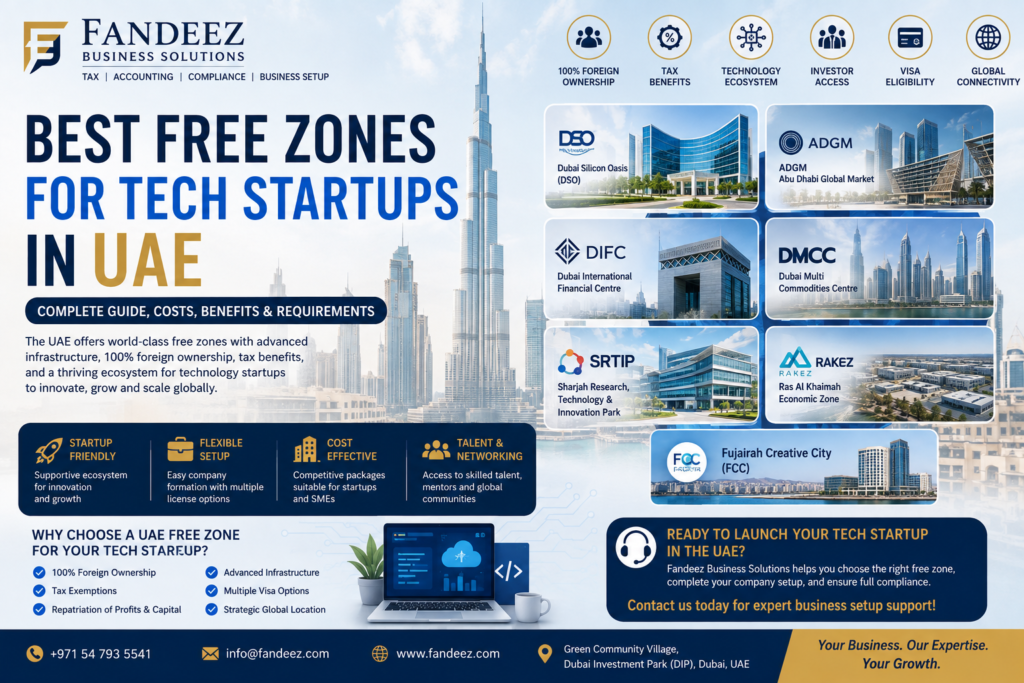
ToggleBest Free Zones for Tech Startups in UAE: Complete Guide, Costs, Benefits & Requirements
Introduction
The UAE has become a global hub for technology entrepreneurs, offering world-class infrastructure, strategic location, business-friendly regulations, and access to international markets. For tech startup founders, choosing the right free zone is one of the most critical decisions that can determine the success of their venture.
With over 40 free zones in the UAE, each offering different advantages, costs, and ecosystems, the selection process can feel overwhelming. This guide explores the best free zones for tech startups in the UAE, comparing costs, benefits, infrastructure, and requirements to help you make an informed choice for your technology business. If you’d rather skip the research and get matched to the right jurisdiction directly, our team can walk you through free zone company formation tailored to your activity.
Why Choose a UAE Free Zone for a Tech Startup?
UAE free zones offer compelling advantages that make them attractive for technology startups and entrepreneurs.
100% Foreign Ownership
Foreign entrepreneurs can own 100% of their business without requiring a local partner or sponsor, providing complete control over operations and profits.
Full Capital Repatriation
Free zone companies can repatriate 100% of their capital and profits to their home country without restrictions, making the UAE an ideal base for international businesses.
Strategic Location
Situated at the crossroads of Europe, Asia, and Africa, the UAE provides access to emerging and developed markets across multiple time zones.
World-Class Infrastructure
The UAE has invested billions in digital infrastructure, including high-speed internet, advanced telecommunications, and cutting-edge data centers.
Startup Ecosystems
Several free zones offer dedicated startup support with incubators, accelerators, co-working spaces, mentorship programs, and access to venture capital.
Visa and Immigration
Free zones offer streamlined visa processing for founders, employees, and their families, making it easier to attract international talent.
Tax Advantages
While UAE Corporate Tax was introduced in 2023, qualifying free zone companies may benefit from a 0% tax rate on qualifying income. However, being in a free zone does not automatically guarantee tax exemption — specific conditions apply. Our Corporate Tax advisory team can confirm whether your specific activity and income qualify.
How to Choose the Best Free Zone for a Tech Startup
Selecting the right free zone requires evaluating multiple factors that align with your business needs.
- Business Activity Compatibility — Ensure the free zone supports your specific technology activity — whether it’s software development, AI, FinTech, SaaS, IoT, or R&D.
- License Type and Cost — Compare trade license costs across free zones. Some offer specialized technology licenses, while others may require additional approvals.
- Office and Facility Requirements — Determine whether you need a flexi-desk, co-working space, or dedicated office. Some free zones require physical office space for certain visa quotas.
- Visa Eligibility and Quotas — Consider how many visas your startup will need. Different free zones offer varying visa quotas based on license type and office space.
- Access to Investors and Funding — If you plan to raise capital, choose a free zone with strong investor connections, such as DIFC, ADGM, or Dubai Silicon Oasis.
- Technology Ecosystem — Evaluate the quality of the local tech ecosystem, including other tech companies, co-working spaces, incubators, and networking events.
- Banking and Financial Services — Consider the ease of opening a corporate bank account. Some free zones have established relationships with banks.
- Future Expansion Opportunities — Think about your long-term growth plans — can the free zone accommodate larger office space, more visas, or a move to a mainland license?
Best Free Zones for Tech Startups in UAE
Dubai Silicon Oasis (DSO)
Best For: Software development, SaaS, IoT, AI, and general technology companies
Dubai Silicon Oasis is one of the UAE’s most established technology-focused free zones, designed as an integrated technology park combining free zone with residential and commercial facilities.
Key Features:
- Home to over 1,000 technology companies
- World-class infrastructure with high-speed fiber optic connectivity
- Incubators, accelerators, and innovation centers
- Flexible office options from flexi-desks to dedicated offices
- Generous visa quotas
Advantages:
- Purpose-built for technology companies
- Strong ecosystem of tech businesses and professionals
- Excellent connectivity and infrastructure
- Proximity to Dubai’s major business districts
- Regular networking and industry events
Potential Limitations:
- Costs can be higher than some other free zones
- May not be suitable for regulated financial activities
Abu Dhabi Global Market (ADGM)
Best For: FinTech, blockchain, digital assets, and financial technology companies
ADGM is an international financial center on Al Maryah Island in Abu Dhabi, operating under English common law.
Key Features:
- Dedicated FinTech ecosystem with Digital Sandbox for testing
- Progressive regulatory framework for FinTech and digital assets
- Strong connections to regional and international investors
- Internationally recognized regulatory standards
Advantages:
- Leading destination for FinTech and blockchain companies
- Progressive and supportive regulatory environment
- Access to sophisticated investors
- English common law framework
- High-quality office facilities
Potential Limitations:
- Higher setup and operational costs
- Focus primarily on financial services
- More complex regulatory requirements for regulated activities
Dubai International Financial Centre (DIFC)
Best For: FinTech, enterprise technology, and technology companies serving the financial sector
DIFC is one of the world’s leading financial centers, located in the heart of Dubai, with its own legal and regulatory system.
Key Features:
- DIFC FinTech Hive, one of the largest FinTech accelerators in the region
- Extensive network of financial institutions and multinational corporations
- Independent regulatory authority with international standards
- Strong investor connections
Advantages:
- Premier location in the heart of Dubai
- World-class regulatory environment
- Extensive corporate and financial network
- Access to enterprise clients
- High-quality professional services
Potential Limitations:
- Higher cost structure
- Focus on financial services
- More formal and regulated environment
DMCC (Dubai Multi Commodities Centre)
Best For: Tech consulting, product development, data analytics, and general technology businesses
DMCC is one of the UAE’s largest free zones, located in Jumeirah Lakes Towers, Dubai.
Key Features:
- Over 20,000 companies across various sectors
- Flexible license options for consulting, software, and e-commerce
- Cost-effective flexi-desk solutions
- Central location with excellent connectivity
Advantages:
- Well-established and reputable free zone
- Extensive business community and networking opportunities
- Central, accessible location
- Wide range of business activities supported
- Flexible office options
Potential Limitations:
- Less specialized for technology than DSO or ADGM
- May lack dedicated tech ecosystem support
Sharjah Research, Technology & Innovation Park (SRTIP)
Best For: R&D, artificial intelligence, robotics, smart technology, and deep-tech startups
SRTIP is an emerging innovation hub in Sharjah focused on research, development, and university-industry collaboration.
Key Features:
- Dedicated research focus with strong ties to universities
- Specialized laboratories and research facilities
- University partnerships for research and innovation
- More affordable than Dubai-based free zones
Advantages:
- Strong focus on R&D and deep technology
- University and research institution connections
- Lower costs compared to Dubai free zones
- Emerging innovation ecosystem
- Suitable for research-intensive businesses
Potential Limitations:
- Less established tech ecosystem than Dubai free zones
- Location may not appeal to all founders
- Limited investor access
- Fewer networking opportunities
RAKEZ (Ras Al Khaimah Economic Zone)
Best For: Cost-conscious startups, software consultancies, SMEs, and early-stage technology businesses
RAKEZ offers cost-effective business setup solutions for startups in Ras Al Khaimah.
Key Features:
- One of the most affordable free zones in the UAE
- Flexible office options at competitive rates
- Supports a wide range of technology activities
- Streamlined company formation process
Advantages:
- Significantly lower costs than Dubai and Abu Dhabi free zones
- Good option for early-stage startups
- Flexible office and visa packages
- Support for a wide range of business activities
Potential Limitations:
- Distance from Dubai’s main tech ecosystem
- Less access to investors and venture capital
- Fewer networking opportunities
- Limited specialized technology infrastructure
Fujairah Creative City
Best For: Digital businesses, media technology, content technology, and creative technology businesses
Fujairah Creative City focuses on media, technology, and creative industries.
Key Features:
- Designed for digital, media, and technology businesses
- One of the most affordable free zones in the UAE
- Supports a wide range of digital activities
- Allows for remote company formation
Advantages:
- Very affordable setup and renewal costs
- Suitable for digital and technology businesses
- Flexible setup process
- Can be managed remotely
Potential Limitations:
- Limited tech ecosystem and networking opportunities
- Distance from major business hubs
- Fewer investor connections
Comparison of UAE Free Zones for Tech Startups
| Free Zone | Best For | Cost Level | Tech Ecosystem | Investor Access | Office Flexibility |
|---|---|---|---|---|---|
| Dubai Silicon Oasis | General Tech, SaaS, AI | Medium-High | Excellent | Good | High |
| ADGM | FinTech, Blockchain | High | Good (FinTech) | Excellent | High |
| DIFC | FinTech, Enterprise Tech | High | Good (FinTech) | Excellent | High |
| DMCC | Consulting, Product Dev | Medium | Moderate | Moderate | High |
| SRTIP | R&D, AI, Robotics | Medium | Emerging | Low | Moderate |
| RAKEZ | Early-Stage, Cost-Conscious | Low | Basic | Low | Moderate |
| Fujairah Creative City | Digital, Creative Tech | Low | Basic | Low | Moderate |
Which UAE Free Zone Is Best for SaaS Startups?
SaaS startups require strong technology infrastructure, scalability, and ecosystem support.
Dubai Silicon Oasis (DSO) is the top recommendation for SaaS companies, offering purpose-built technology infrastructure, a strong software ecosystem, and flexible office options.
DMCC provides a cost-effective alternative with its large business community and flexi-desk options, suitable for B2B SaaS startups.
RAKEZ is ideal for cost-conscious SaaS businesses that do not require extensive local networking and are willing to operate from Ras Al Khaimah.
Which UAE Free Zone Is Best for FinTech Startups?
FinTech startups face unique regulatory and licensing requirements.
ADGM is widely considered the premier destination for FinTech startups, with its Digital Sandbox for testing innovative products and progressive regulatory framework.
DIFC is also excellent, particularly for startups targeting enterprise clients in the financial sector, with the DIFC FinTech Hive accelerator providing access to mentoring, funding, and corporate partners.
Important: Regulated financial activities may require additional approvals from financial regulators. Always confirm requirements with the relevant authority.
Which UAE Free Zone Is Best for AI, Robotics & R&D?
Deep-tech and research-focused companies require specialized infrastructure and partnerships.
SRTIP is specifically designed for R&D, AI, and robotics, with university connections and specialized research facilities.
Dubai Silicon Oasis also supports AI and advanced technology businesses with its technology infrastructure, data centers, and innovation hubs.
Free Zone Tech Startup Setup Costs in UAE
Understanding costs is essential for budgeting. Below are indicative cost ranges:
Typical Cost Categories:
- Business License: AED 10,000–50,000+ depending on free zone
- Registration Fees: AED 2,000–10,000 one-time
- Establishment Card: AED 1,000–5,000 annually
- Flexi-Desk: AED 5,000–15,000 annually
- Co-Working Space: AED 10,000–25,000 annually
- Dedicated Office: AED 20,000–100,000+ annually
- Visa Processing: AED 3,000–5,000 per person
Cost Comparison by Free Zone:
- Cost-effective: RAKEZ, Fujairah Creative City (approx AED 10,000–15,000)
- Mid-range: DMCC, SRTIP (approx AED 15,000–25,000)
- Premium: DSO, DIFC, ADGM (approx AED 25,000–50,000+)
- Annual Renewal: Budget approximately 70–80% of initial setup costs for annual renewals.
Important: These are indicative costs only. Always confirm current fees directly with the relevant free zone authority, or get a tailored cost breakdown from our business setup advisory team.
Documents Required to Set Up a Tech Company in a UAE Free Zone
Standard Documents:
- Passport copies for all shareholders and directors
- Passport-size photographs (2–4 per individual)
- Proof of address for each shareholder
- Business plan (required in some free zones)
- Shareholder and director details
- Business activity description
- Corporate documents for corporate shareholders
Additional Documents (may vary):
- Resume/CV for directors and key personnel
- Police clearance certificate
- Educational credentials
Important: Document requirements vary by free zone. Confirm with your chosen authority or consultant.
Do Tech Startups Need an Office in a UAE Free Zone?
Office requirements depend on the free zone and license type.
Office Options:
- Flexi-Desk: Registered address only — cost-effective for early-stage startups (1–3 visas)
- Co-Working Space: Physical workspace with shared facilities (3–6 visas)
- Dedicated Office: Private space — required for larger teams and specialized activities
Visa Implications: Visa quotas are often linked to office type. Flexi-desks typically offer fewer visas than dedicated offices.
Banking, VAT & Corporate Tax Considerations
Corporate Bank Account
Banks require trade license, MOA, shareholder identification, business plan, and source of funds documentation. Some free zones have better banking relationships than others.
UAE Corporate Tax
- Standard rate: 9% on profits exceeding AED 375,000
- Qualifying free zone companies may benefit from 0% on qualifying income
Important: Being in a free zone does not automatically exempt from Corporate Tax. Specific substance, activity, and income conditions apply — our Corporate Tax registration and advisory service can assess your eligibility.
UAE VAT
- Standard rate: 5%
- Mandatory registration for turnover exceeding AED 375,000
- Voluntary registration available between AED 187,500–375,000
Get help determining your registration threshold and filing obligations through our VAT services in Dubai.
Common Mistakes When Choosing a UAE Free Zone
- Choosing Based Only on Cheapest License — The lowest cost may not provide the infrastructure, ecosystem, or support your business needs.
- Selecting Incompatible Business Activity — Ensure your activity is fully approved in your chosen free zone.
- Ignoring Office Requirements — If you plan to sponsor multiple visas, you may need a dedicated office.
- Not Considering Visa Needs — Visa quotas are often tied to office space — plan for future requirements.
- Ignoring Banking Requirements — Some free zones have reputational issues with banks — research before committing.
- Failing to Assess Future Expansion — Can the free zone accommodate your long-term growth?
- Assuming Every Free Zone Has Same Tax Treatment — Tax benefits vary based on activity, income, and substance.
How Fandeez Helps Tech Startups Choose the Right Free Zone
Fandeez Business Solutions is a UAE-based tax, accounting, and business setup consultancy helping technology entrepreneurs establish and grow their businesses in the UAE.
Services for Tech Startups:
- Free zone comparison and selection guidance
- Business activity identification and license selection
- Complete company formation and registration
- Visa processing for founders and employees
- Corporate bank account support
- Accounting and bookkeeping setup
- VAT registration and compliance
- Corporate Tax registration and advisory
- Office setup assistance
- Ongoing regulatory compliance
Fandeez combines deep local knowledge with professional expertise to ensure your tech startup is set up correctly, compliantly, and cost-effectively. Meet the team who will guide you through the process.
Frequently Asked Questions
1. What is the best free zone for tech startups in UAE? The best free zone depends on your activity, budget, and growth plans. DSO is excellent for general tech and SaaS. ADGM and DIFC are ideal for FinTech. RAKEZ and Fujairah are cost-effective options.
2. Which free zone is best for a SaaS company? Dubai Silicon Oasis (DSO) is widely considered the best for SaaS due to its technology infrastructure and ecosystem.
3. Which UAE free zone is best for FinTech? ADGM and DIFC are the premier choices, offering progressive regulatory frameworks and FinTech-focused ecosystems.
4. Is Dubai Silicon Oasis good for technology startups? Yes. DSO is one of the UAE’s leading technology-focused free zones with excellent infrastructure and a strong tech ecosystem.
5. Is ADGM suitable for FinTech and blockchain? Absolutely. ADGM offers one of the most FinTech-friendly regulatory environments in the region.
6. How much does it cost to start a tech company in a UAE free zone? Costs range from approximately AED 10,000 for a basic license to over AED 50,000 for premium free zones with office space.
7. Do free zone tech companies need a physical office? Not necessarily. Flexi-desk and co-working options provide a registered address without a dedicated office, but visa quotas are often tied to office type.
8. Can foreigners own 100% of a UAE free zone company? Yes. All UAE free zones allow 100% foreign ownership.
9. Do UAE free zone companies pay Corporate Tax? Free zone companies are subject to Corporate Tax but may qualify for a 0% rate on qualifying income if specific conditions are met. Read more in our Corporate Tax services guide.
10. Can a free zone tech company open a corporate bank account? Yes, but bank approval is not guaranteed. Some free zones have better banking relationships than others.
11. What documents are required for company formation? Passport copies, photographs, proof of address, business plan, shareholder and director details, and activity description.
12. How can Fandeez help with UAE free zone company formation? Fandeez provides comprehensive support including free zone comparison, company formation, visa support, bank account assistance, accounting, tax registration, and ongoing compliance.
Choose the Right Free Zone for Your Tech Startup with Fandeez
Selecting the best free zone for your tech startup in the UAE is one of the most important decisions you will make. The right choice provides access to world-class infrastructure, a supportive ecosystem, investors, talent, and a strategic location for global expansion.
Looking for the best free zone for your tech startup in the UAE? Let Fandeez help you compare your options, choose the right business activity, complete company setup, and stay compliant with UAE tax and accounting requirements.
Get in touch with our team today to start your free zone company formation.